October 6, 2026 · 4 min read · The Laser Point team
Facial laser hair removal for women
We go zone by zone through what laser can do for the upper lip, chin, cheeks and neck. And we are upfront about the limit that applies to fine, light hair.
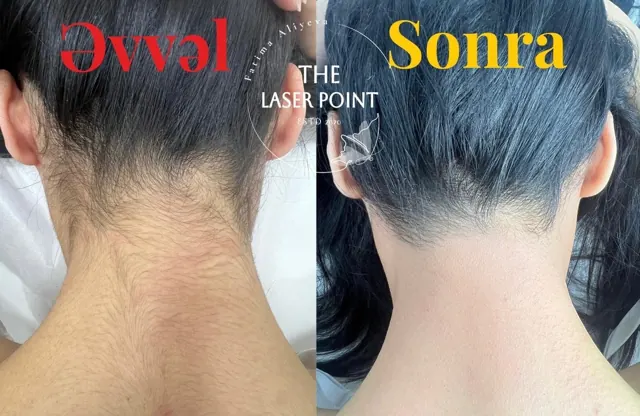
Unwanted facial hair bothers many women, even when there is not much of it. A few dark hairs on the upper lip, coarse hairs on the chin or fuzz on the cheeks can easily become a daily chore. Facial laser hair removal can make that chore much smaller. Here we explain which zones we treat, what the result depends on and the honest limit that applies to fine, light hair.
Who facial laser hair removal suits
We work with an original Candela Alexandrite laser (755 nm). It targets the pigment in the hair, called melanin. That is why the best results come from dark hair on light to medium skin.
On the face, laser usually works well if you have:
- dark, visible hairs on the upper lip and chin;
- coarse hair on the cheeks and neck;
- irritation after shaving or tweezing;
- frequent ingrown hairs.
Alexandrite does not work on white, grey or very light blonde hair. Very dark or freshly tanned skin needs a consultation first. We cover this in detail in our post on Alexandrite laser on darker skin.
Upper lip, chin, cheeks and neck
The face is made up of several small zones, and each has its own character.
Upper lip. The most requested zone. The hairs are often short, but when they are dark they show. Treatment takes a few minutes.
Chin. Hair here is usually coarser and more stubborn. It is more closely linked to hormones, so this zone sometimes needs more sessions.
Cheeks. Cheeks can have both dark hairs and fine, light fuzz. The result depends on which type you have.
Neck and throat. Neck hair often continues from the chin, so treating these zones together makes sense.
The forehead, temples and the area between the brows can also be treated separately. Laser is not used to shape the brows. The between-brows zone is only for stray hairs.
Zones and prices
We price facial laser hair removal by zone:
- forehead 5 AZN, temples 5 AZN, between brows 3 AZN;
- cheeks 5 AZN, upper lip 3 AZN, chin 5 AZN;
- throat 5 AZN, neck 10 AZN;
- full face 13 AZN.
If you need several zones, the full face usually works out better. For example, upper lip, chin and cheeks separately come to 13 AZN, while the full face covers more for the same price. There is also a full body and face package at 40-60 AZN depending on pulse count. Every price is on our price list.
An honest note on fine, light hair
There are two kinds of facial hair. The first is dark, coarse hair, which responds well to laser. The second is fine, light vellus hair, often called peach fuzz. It holds very little pigment, so the Alexandrite laser affects it weakly or not at all.
That is why we never promise a face as smooth as glass. Laser reduces the dark hairs, while light fuzz usually stays. For most women this is not a problem, because that fuzz is barely visible. But it is fair to know in advance.
How many sessions and how far apart
The main course is usually 6-8 sessions. Many clients notice after the first 1-2 sessions that hair grows sparser, finer and more slowly. The specialist sets the interval individually, usually 4-6 weeks for the face.
The chin and neck are sensitive to hormones, so maintenance sessions may be needed there after the course. If hair growth has increased suddenly or your cycle is irregular, it is worth seeing an endocrinologist or gynaecologist. We cover this in our post on laser hair removal and PCOS.
Your first touch-up after the first session is free. Later touch-ups are rarely needed and cost 5 AZN. There is more on session counts by zone in our post on how many laser sessions you need.
Why not just keep tweezing or threading? These methods pull the hair out, but the follicle stays in place and the hair grows back. Frequent plucking on the face irritates the skin and causes redness and ingrown hairs. Laser weakens the follicle and makes hair sparser over time. During the course only shaving is allowed. That can feel unusual at first, but it matters for the result.
Preparation and aftercare
Facial skin is delicate, so the rules are simple but important:
- Shave the zone 12-24 hours before the session.
- Stop tweezing, waxing, threading and epilating about 4 weeks before. The root needs to be in place.
- Avoid tanning and sunbeds for 2 weeks before and after the session.
- Come without makeup on the zone.
- Keep scrubs and acids off the zone for a few days afterwards, and use SPF 50 every day.
Mild redness for a few hours is normal. For the first 24-48 hours it is best to skip the sauna, hot baths and the pool. Hairs shed gradually over 7-14 days, and black dots at the root leave on their own in the same time.
If there is active herpes, a rash or a fresh tattoo in the zone, be sure to mention it. Treatment is usually postponed during pregnancy and breastfeeding.
What it is like at the studio
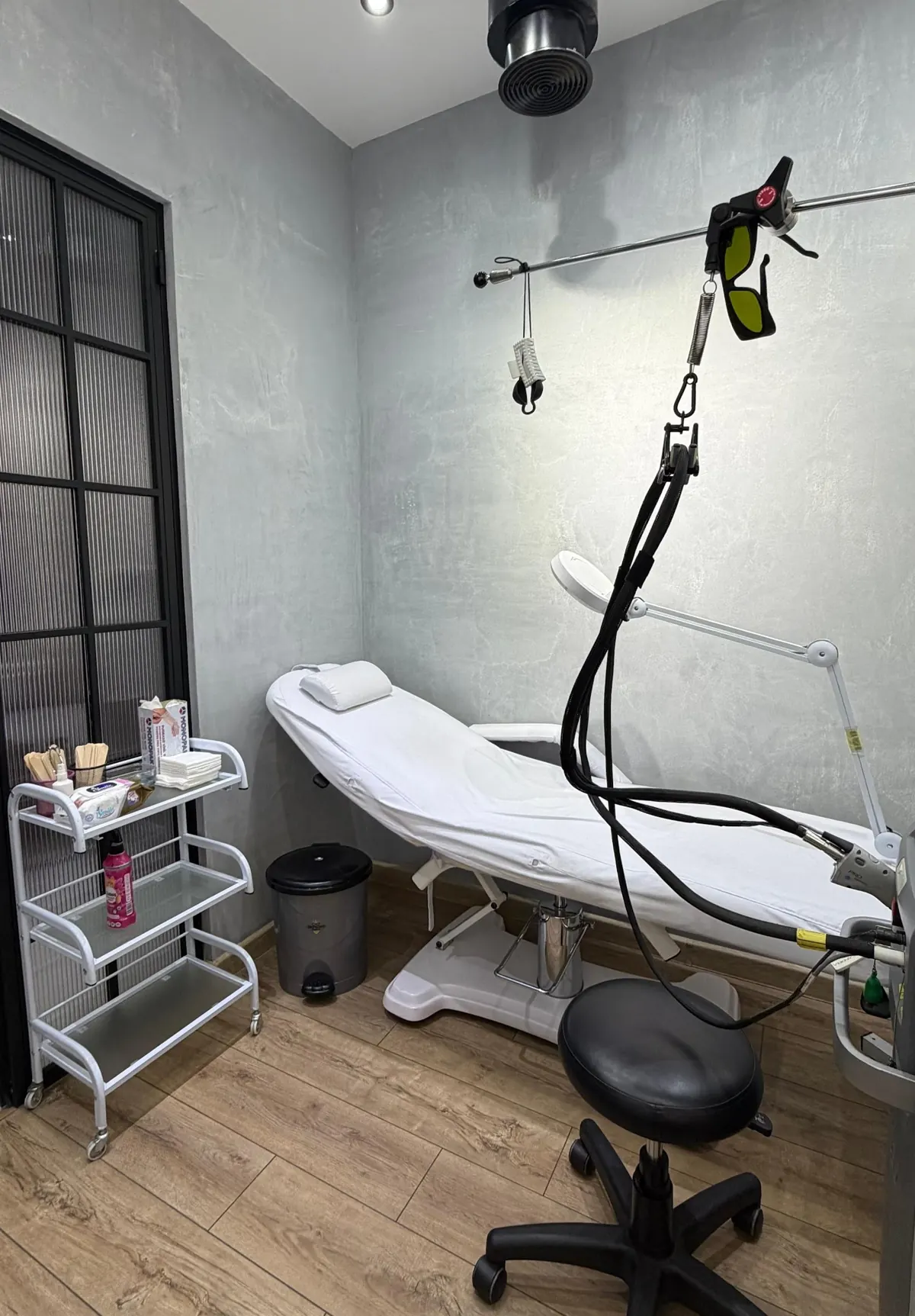
The Laser Point is a women-only studio in Narimanov, Baku. Visits are by appointment, with no waiting line. The door is closed and only you and our specialist Fatima Aliyeva are in the room. A Zimmer cold-air unit cools the skin. Most clients describe the sensation as a short warm snap, and the upper lip can feel a little more sensitive.
See our facial laser hair removal page for more on each zone. When you are ready, book a time that suits you. At the first visit we will look at your hair and suggest an honest plan.
FAQ
How much is upper lip laser hair removal?
The upper lip is 3 AZN with us, the chin 5 AZN and the full face 13 AZN. If you need several zones, the full face usually works out better.
Does laser remove fine, light facial fuzz?
Alexandrite targets pigment, so it has little effect on fine, light hair. Dark hairs reduce well, while light peach fuzz usually stays.
How far apart are facial sessions?
The specialist sets the interval individually, usually 4-6 weeks for the face. The main course is usually 6-8 sessions.
This article is general information and does not replace medical advice. If you have a skin condition, are pregnant or take medication, tell the specialist before the procedure.