October 8, 2026 · 4 min read · The Laser Point team
Alexandrite laser on darker skin, who it suits
Olive or tan skin does not rule out laser, but it does call for an honest assessment. We explain skin phototypes, why a fresh tan is risky and what a test spot is for.
Can you have laser hair removal on darker skin? We hear this question a lot, and it deserves an honest answer. The result depends on your skin tone, your hair colour and whether you have tanned recently. Here we explain who the Candela Alexandrite laser suits, where we are careful and why every course starts with a consultation.
How the Alexandrite laser works
The Alexandrite laser works at a wavelength of 755 nm. Its light targets melanin, the pigment that gives colour to both hair and skin. When the hair root holds plenty of melanin, the light turns into heat there and weakens the follicle.
The catch is that skin contains melanin too. The darker the skin, the more energy it absorbs on its own. That is why the ideal match for Alexandrite is dark hair on light to medium skin.
Hair colour matters as much as skin tone. Alexandrite does not work on white, grey or very light blonde hair, because there is almost no pigment to target. Women with olive or tan skin usually have dark hair, which is an advantage. The real question is whether there is enough contrast between skin and hair.
Alexandrite laser on darker skin and phototypes
Specialists usually assess skin with the Fitzpatrick scale, which describes how your skin reacts to the sun.
- Types I-II. Very fair skin that burns easily. Results on dark hair are usually excellent.
- Type III. Medium tone, sometimes burns, then tans. A good candidate for Alexandrite.
- Type IV. Olive or light brown skin that rarely burns. Often suitable, with settings chosen more carefully.
- Types V-VI. Very dark skin. Alexandrite carries more risk here and is usually not recommended.
Olive and tan skin most often falls into type III or IV. So "I have darker skin" does not automatically mean "laser is not for me". But this needs to be assessed at a consultation, not guessed by eye.
A fresh tan is a separate issue
Naturally olive skin and a fresh suntan are not the same thing. A tan means temporary extra melanin in the skin, and that raises the risk of burns and pigment marks during treatment.
That is why we ask you to avoid tanning and sunbeds for about 2 weeks before and 2 weeks after a session. SPF 50 afterwards is a must. If your skin has just tanned, we may suggest moving the session by a few weeks. It is not good business for us, but the safety of your skin comes first.
We cover the warmer months in more detail in our post on laser hair removal in summer.
Why a test spot helps
If your skin tone is borderline or you have never had laser before, the specialist may treat a small test spot first. The aim is simple: to see how your skin responds to the chosen settings.
Mild redness for a few hours is normal. If the reaction is unusual, the settings are adjusted, or you are told honestly that the treatment is not right for you. A test spot is insurance for both of us. A course that starts without rushing tends to give better results in the end.
What we ask at the consultation
Our laser specialist Fatima Aliyeva asks a few simple questions at the first visit:
- Does your skin burn in the sun, or tan quickly?
- Have you been in the sun or on a sunbed in the last 2 weeks?
- Which medication do you take? Drugs that make skin sensitive to light, such as isotretinoin, matter.
- Do you tend to form keloid scars?
- Is there a fresh tattoo, an active rash or herpes in the zone?
Honest answers lead to the safest result. Treatment is usually postponed during pregnancy and breastfeeding. Epilepsy triggered by light must be mentioned too.
Aftercare for darker skin
Darker skin can react a little more to heat, so the first few days of care matter. Mild redness and warmth for a few hours are normal. During that time your skin simply needs rest.
- For the first 24-48 hours, skip the sauna, hot baths, the pool and sweaty workouts.
- Keep scrubs and acids off the zone for a few days.
- Use SPF 50 every day, even when it is cloudy.
- Moisturise, and reduce friction from tight synthetic clothes.
Over the 7-14 days after a session the hairs shed gradually. Black dots at the root are burnt hairs and leave on their own in that time, so there is no need to pluck them. Once the first few days have passed, a gentle scrub and moisturiser help the process. For sensitive skin we use a soothing foam during the session when needed. If you notice an unusual mark or redness that lasts, message us. The full routine is in our laser aftercare guide.
What a session is like
Our studio is in Baku, in Narimanov, at 6a Nazim Hajiyev street, and it is for women only. Visits are by appointment, with no waiting line. The door is closed and only you and the specialist are in the room.
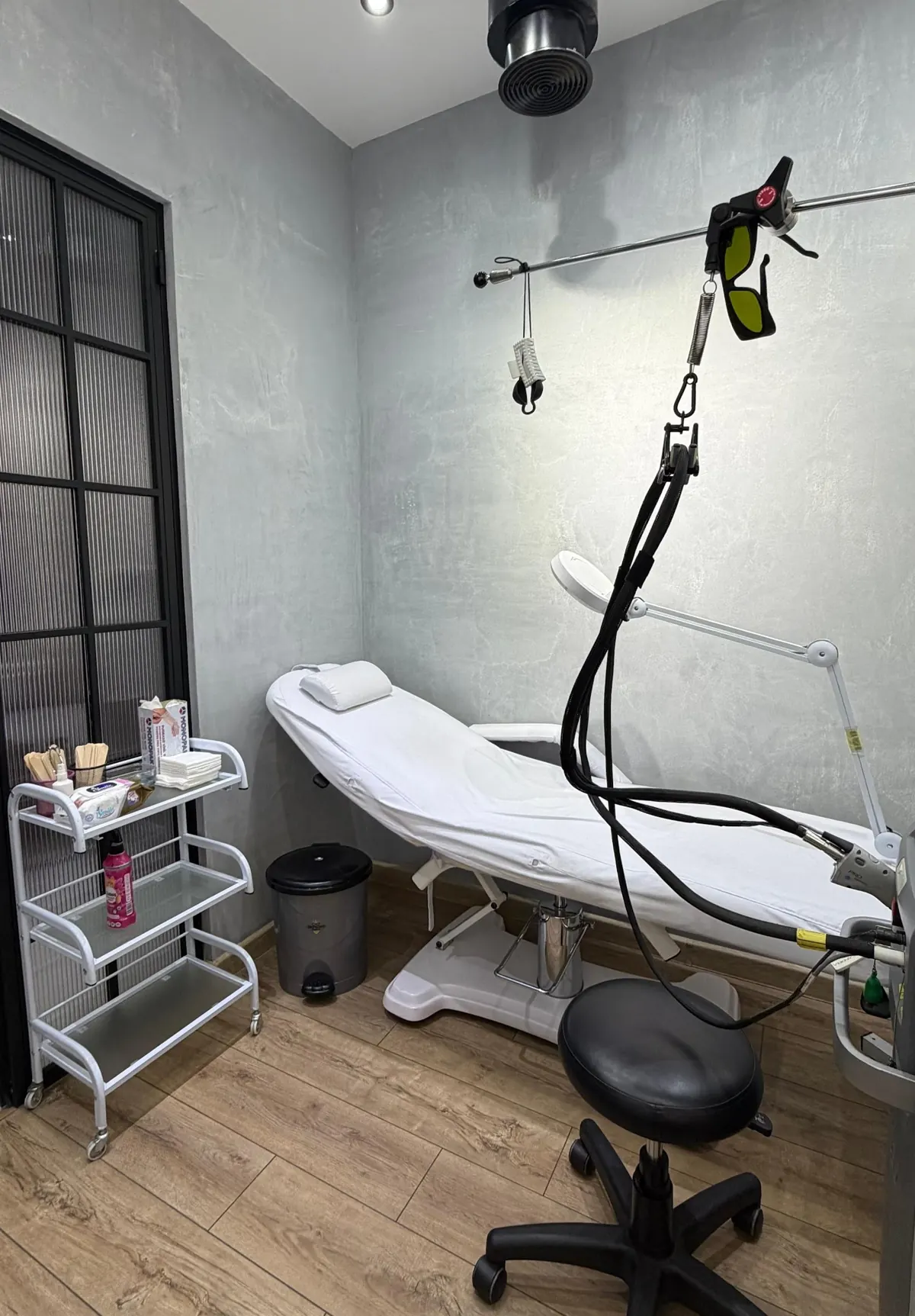
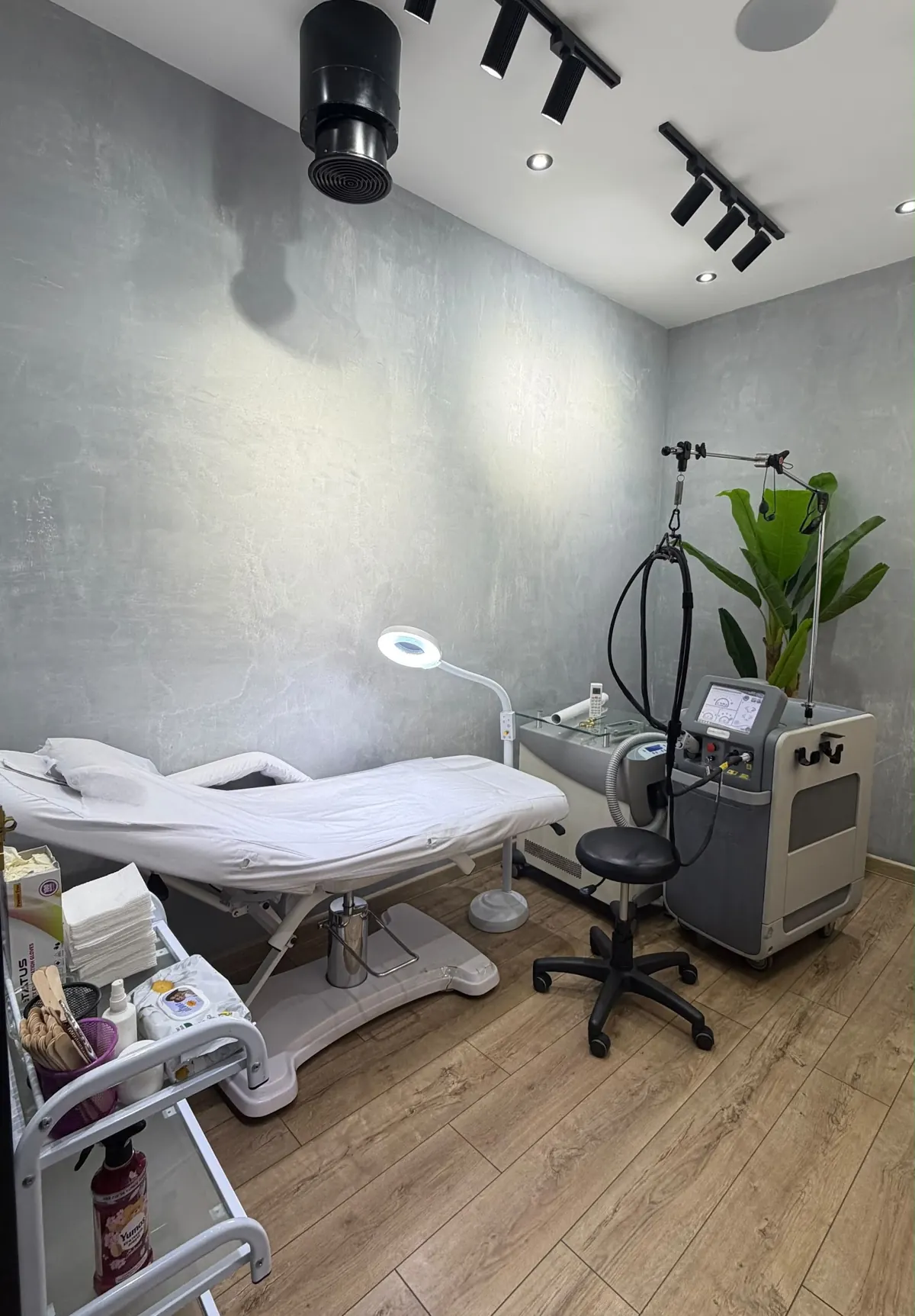
During treatment a Zimmer cold-air unit cools the skin. On darker skin this matters even more, because it protects the surface and makes the sensation more comfortable. Most clients describe it as a short warm snap. You can read more about the machine on our Candela Alexandrite page. If you are thinking about your face, see facial laser hair removal, and our prices are listed on the price page.
In short, laser on darker skin is not a yes or no question. On types III-IV Alexandrite often works well, while on types V-VI it is usually not suitable. A fresh tan is always a reason to wait. The right path is a consultation and, where needed, a test spot.
Want to know whether laser suits your skin? Book a short consultation and we will give you an honest answer.
FAQ
Can Alexandrite laser be used on olive or tan skin?
Often, yes. On phototypes III and IV Alexandrite usually works well, with settings chosen more carefully. On very dark skin, types V-VI, it is usually not recommended.
I have a tan, can I still come for a session?
A fresh tan raises the risk of burns and pigment marks. Avoid tanning for about 2 weeks before a session, and if your skin has just tanned we will suggest moving the appointment.
Do I have to pay for a test spot?
The specialist decides at the consultation whether a test spot is needed. For details, message or call us on 050 200 38 13.
This article is general information and does not replace medical advice. If you have a skin condition, are pregnant or take medication, tell the specialist before the procedure.